
New European regulation (PPWR), circular strategies and innovations for the dry and fresh food sector
The food sector continues to innovate, and pressure to reduce packaging waste is increasing at the same time. The Packaging & Packaging Waste Regulation (PPWR) states that the amount of packaging waste per capita must be reduced by 5% by 2030. For smart companies, this presents numerous opportunities to innovate. Major players continue to optimise packaging design in order to minimise the amount of material, but numerous pilot projects are also being set up for refilling and reusing packaging.
On this page, you will discover the most significant impact of PPWR on food producers as well as key trends and innovations.
PPWR for the dry and fresh food sector
This list is not exhaustive: it contains the most important points from the PPWR that are relevant to the dry and fresh food sector. More information can be found on our PPWR page.
Please note: The European Commission is still working on an official FAQ and additional delegated and implementing acts, which may contain further clarification or changes. These documents have not yet been published. Keep an eye on official EU sources and national guidelines for the latest information. Fost Plus is not liable for any inaccuracies or omissions in this list, or for the consequences of actions taken on the basis of it. We recommend that you first seek legal advice.
For producers*
a. Packaging responsibility: As a food company, you are usually considered the ‘producer’ of your packaging under the PPWR. You may only use packaging that meets the PPWR requirements. Your suppliers must also be able to provide the necessary technical documentation and EU declarations of conformity.
If you, as a manufacturer, importer or distributor, place packaged products on the market of a Member State for the first time – including through distance selling – you will be considered a producer in that Member State.
b. Prepare for registration in each EU country where you supply products (2027): once the national PPWR register opens in each Member State (18 months after the February 2026 implementing act), your company must be registered before you place your packaging on the market.
c. Prepare your information and keep it up to date in accordance with Annex IX (eporting from 1 June after the first full year): record the quantity and type of material, the type of packaging (primary/secondary/transport packaging) and reusable packaging systems (if applicable) for each order. This information must be submitted annually.
d. From August 2028, packaging placed on the EU market must have a harmonised label on it indicating the material it is made of, for example, plastic, aluminium, paper/cardboard or glass.
Read more about labelling in this blog post
e. From August 2026, drinks capsules, coffee pads and tea bags will also be considered packaging. This means that all PPWR rules also apply to these types of packaging, so the quantities placed on the market from August 2026 onwards are subject to a declaration and contribution obligation.
The full list is in PPWR ANNEX I
*Producer: makes packaging available for the first time in a Member State (e.g. Belgium) and may be the manufacturer, importer or distributor (authorised representative for EPR if the producer is not established in the Member State).
a. Single-use plastic grouped packaging for selling multiple products will be prohibited. Only grouped packaging required for logistics purposes will still be permitted.
b. For unprocessed fruits and vegetables under 1.5 kg, single-use plastic packaging will be prohibited. This includes bags, netting bags, trays and jars. Exceptions are possible if there is a risk of water loss, oxidation or microbiological hazards, or if it is necessary to separate organic from non-organic products, in accordance with Regulation (EU) 2018/848.
Read our blog post about restrictions or see all the details in PPWR Annex V
This regulation is a target for retailers and applies to both food and non-food products.
Read our blog post about reusable and refillable packaging or see all the details in PPWR Art. 28.
a. From 1 January 2030, companies must ensure that 40% of their transport packaging is reusable. This applies to the packaging types listed in Article 29(1): pallets, folding crates, boxes, trays, plastic crates, IBCs, pails, drums and canisters. What is more, this packaging must be fully reusable from 2030 in internal logistics within Belgium or between linked companies in EU Member States. Article 29(4)(d) explicitly excludes cardboard boxes.
See details in PPWR Art. 29 – more details in our blog article
b. At least 10% of the grouped packaging used to combine products (whether packaged or not) into a stock or inventory unit must be reusable by 2030, with a target of 25% by 2040, excluding cardboard.
Read our blog post with the definition of reusable packaging or see all the details in PPWR Art. 29
This means it must meet the design-for-recycling criteria set out in the delegated acts (Article 6 (2)(a)). Packaging must achieve recyclability class A, B or C from 2030, and class A or B from 2038. The European Commission will establish detailed design-for-recycling criteria by 1 January 2028. Article 6 (11) contains a list of exemptions from the recyclability requirement, such as for contact-sensitive packaging for infant formula and follow-on formula, processed cereal-based foods and baby food, and food for special medical purposes as defined in Article 1(a), (b), and (c) of Regulation (EU) No 609/2013.
Read our blog post about recyclability or see all the details in PPWR Art. 6.
From February 2028, tea bags, coffee pads and labels/stickers on fruit and vegetables must be compostable. These types of packaging are the only ones targeted because they are considered ‘soft after use’ or permeable, meaning that they are inseparable from and necessary for the consumption of their contents. They must meet compostability standards compatible with the processing of organic waste in anaerobic digestion and industrial composting plants.
All other packaging must be recyclable, apart from rare exceptions permitted by Member States, which must meet strict, clearly defined criteria. Currently, there is insufficient support from national and regional authorities to extend this further in Belgium.
See details in PPWR Art. 9 + Annex III
Read the details in Article 5(5).
Watch our webinar with experts for more details.
R-strategies for dry and fresh food
Below, we share our insights on possible strategies and offer inspiration for experimentation and innovation by companies.
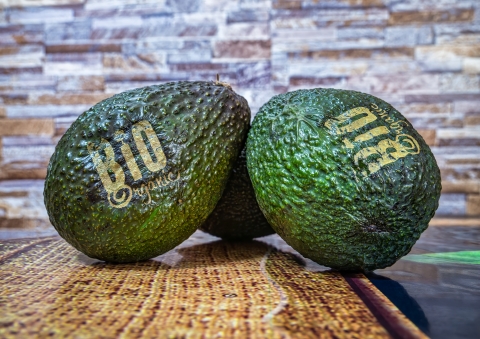
Eliminating packaging isn’t always possible because it can lead to food being wasted. To understand what’s possible, the entire supply chain must be evaluated. In some cases, packaging is only used to identify the product, and laser branding can be used for this purpose (such as the marking of organic fruits and vegetables). Some companies even dispense with labels altogether. Read more in our blog post.
Packaging lines are being optimised all the time based on the product to be transported. Innovations are constantly being developed to ensure that the packaging material used is minimal and as light as possible.
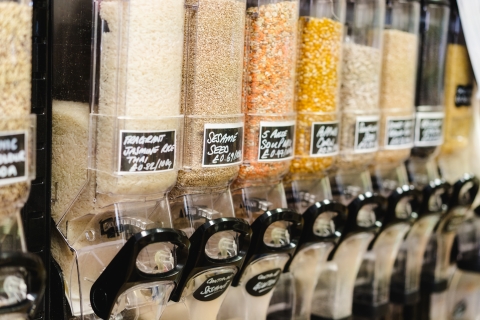
For dry products, we’re already seeing quite a few experiments which involve consumers filling their own containers or getting them filled in the shop. This is also possible for fresh, viscous or liquid products, but each requires its own appropriate container in shops. These can be shared. Have a look too at how you can make bulk packaging reusable in B2B.
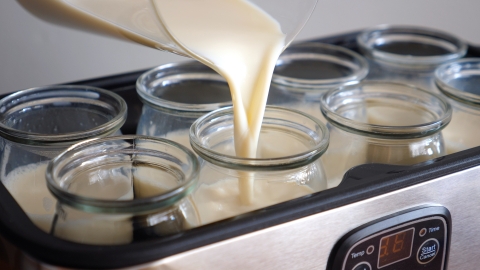
Refill at home concepts for dry and fresh food encourage consumers to buy larger or concentrated formats, such as yoghurt cultures, baking and bread mixes, dried legumes, granola or pasta in bulk packaging, dehydrated meals or soups and fermentation kits such as kombucha or kefir. They can then convert these at home or transfer them into smaller reusable containers for practical daily use.
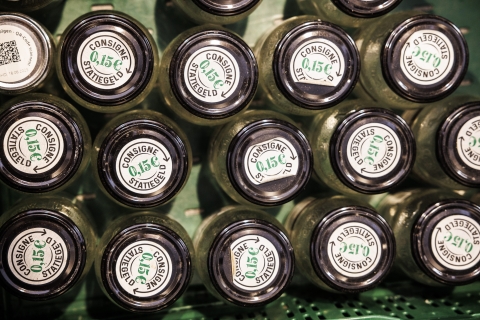
Food packaging solutions offer consumers the opportunity to receive goods in reusable packaging, which they can return to designated collection points – often in exchange for a small deposit or reward. Producers can then clean and reuse this packaging for future products. Glass packaging has been around for some time, but here too we are seeing numerous innovations, pool providers, standards and pilot projects currently being developed and tested in the sector.
Read our blog about our field trip and find partners via our MatchMaker
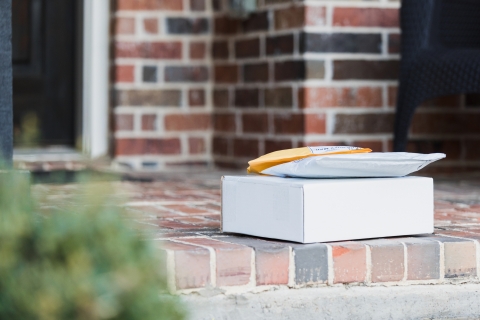
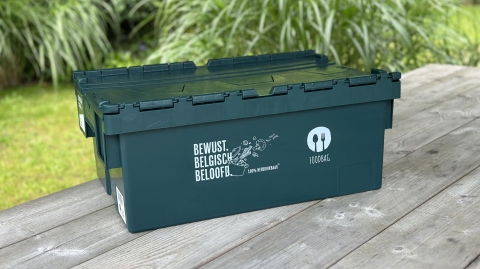
Consumers can receive meals or groceries that they have ordered online in a reusable box or bag. They can then return the reusable packaging when they receive their next delivery, usually in combination with a reward or deposit to encourage returns.
Read our blog about home deliveries.
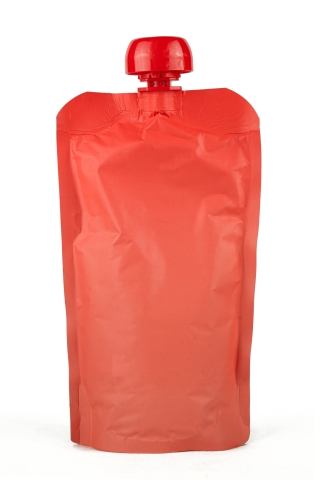
Bij het (her)ontwerpen van voedselverpakkingen is het belangrijk om ontwerpen te vermijden die de sorteerbaarheid en recycleerbaarheid belemmeren, zoals het gebruik van verschillende materialen, niet-IR-detecteerbare componenten, full body sleeves of carbon black-pigmenten, aangezien deze door NIR-detectiesystemen in Belgische sorteercentra niet correct worden herkend en zo de sortering verstoren. Om na te gaan of je verpakking recycleerbaar is, raadpleeg onze algemene Design for Recycling-richtlijnen en de Design4Recycling FAQ, neem gerust contact met ons op voor persoonlijk advies via het contactformulier, en houd er rekening mee dat de komende jaren belangrijke wijzigingen worden verwacht door de PPWR-wetgeving. Schrijf daarom zeker in op onze nieuwsbrief om op de hoogte te blijven van de laatste updates.
Fost Plus as a driver of change
Fost Plus is supporting its members in the transition to sustainable materials management. It is clear that the impact will be different for each sector, as will the solutions. Some products can be sold or shipped without packaging, for others the challenge lies in setting up logistical return systems, and in yet other cases the main focus is on recycled content.
Together with our members, we explore different paths and try to offer solutions. By sharing best practices and successful projects, we aim to inspire companies and encourage cross-pollination between different sectors.
Do you want to explore options for the reduction and reuse of your packaging, but are you not yet sure where to start? Are you looking for the right partners? Are you working on a prevention or reuse project but have you got stuck somewhere? Or do you just want to share a successful experience? We’d love to hear about it! Use our contact form to get in touch.